News

News

中方NEXRUR项目组成员赴西班牙参加社区主导商业模式创新网络研讨会

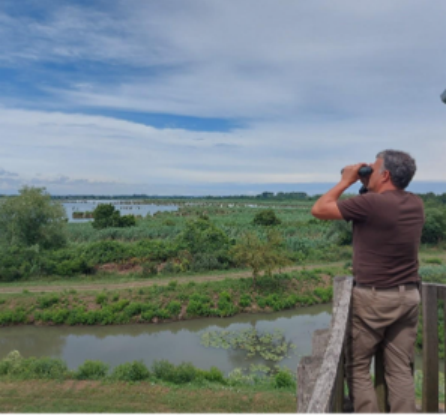
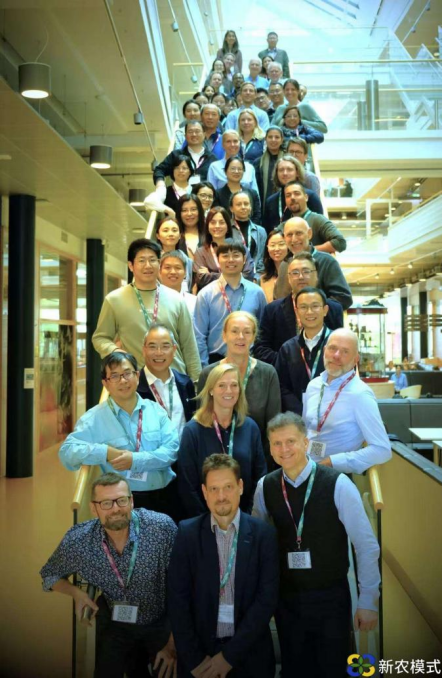
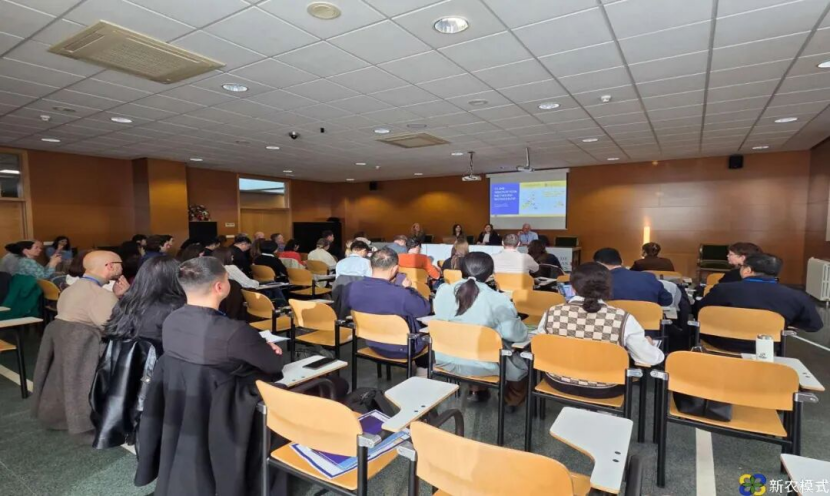
2026年4月14日 近日,NEXRUR项目组成员应邀赴西班牙布尔戈斯大学,参加在布尔戈斯举办的中欧合作项目“社区主导商业模式创新网络研讨会”。本次会议于2026年4月14日至17日举行,汇聚了来自欧洲及中国的科研机构、高校及实践伙伴,共同探讨社区主导型商业模式的创新与实践路径。 会议期间,与会代表围绕NEXRUR项目总体框架与目标展开深入交流。重点开展了“社区主导商业模式画布模型(Community-led Business Model Canvas)”的案例分析与小组讨论,分享不同地区不同案例在社区商业模式中的挑战与成功经验。同时,欧方为参会者提供了系统化总结与提炼实践经验的方法工具。期间,会议设置了“中欧科研合作对接”环节,通过多场分会讨论交流,促进双方在项目层面的深入合作。中方成员在该环节中与欧洲多家机构建立了进一步的联系,为未来项目和课题层面联合研究与成果转化奠定基础。此外,项目组成员实地考察了以生态养殖和葡萄种植为代表的农业模式创新案例,深入了解生态导向型农业在提升农村可持续发展能力中的作用。 本次研讨会通过“理论研讨+案例分析+田野调研+国别分享”的多维度交流模式,不仅加深了项目组成员对欧洲在再生农业与社区商业模式创新方面的理解,而且有效推动了中欧项目在社区主导型商业模式及乡村可持续发展领域的深度合作,也为中国推进乡村振兴与绿色转型提供了可借鉴的实践经验。

News

2026年中国-欧盟农业旗舰项目课题一、二、四启动会暨方案研讨会在宁波召开

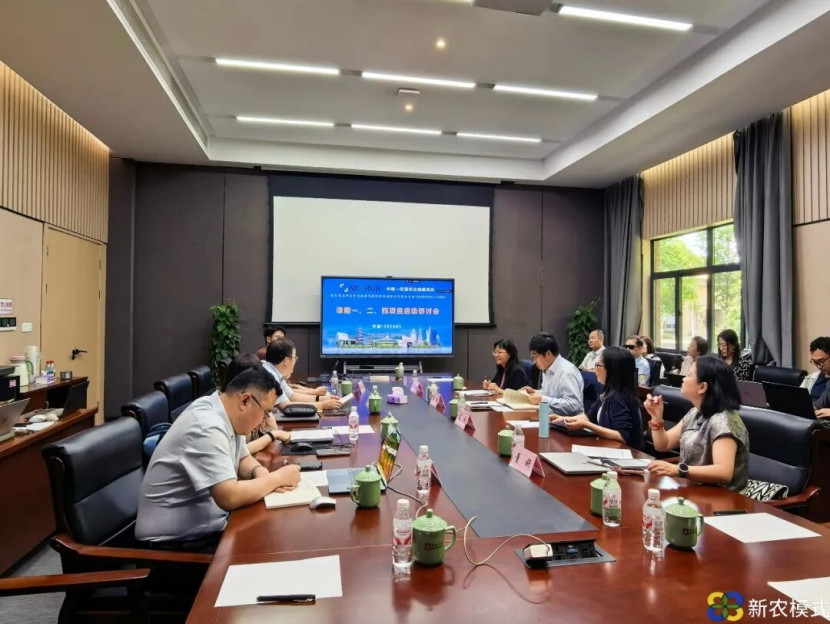
2026年5月14日至17日 为持续推进国家重点研发计划政府间科技创新合作专项——“农民和农村新的可持续商业和生产模式”(中国-欧盟农业旗舰项目)的课题研究,2026年5月14日至17日,由农产品质量安全全国重点实验室(宁波大学)主办,浙江省土壤生物功能调控与一体化健康国际科技合作基地和宁波大学-国际热带农业中心(CIAT)土壤健康联合实验室承办的中国-欧盟农业旗舰项目课题一、二、四启动会暨研究方案研讨会在宁波顺利召开。 会议汇聚了来自宁波大学、中国科学院城市环境研究所、山东省农业科学院、中国农业大学、中国科学院生态环境研究中心、浙江省农业科学院、浙江大学、中国农业科学院等多家项目参与单位的课题负责人与研究骨干50余人。会议通过专题研讨与深入交流,进一步明确了各课题的研究方向,深化了课题之间及课题内部的协同机制,为课题的高质量实施奠定了坚实基础。 图1 中国-欧盟农业旗舰项目课题一、二、四启动会暨方案研讨会全体合影 5月15日,会议首先举行了课题方案讨论会。课题组成员围绕各课题试验方案进行了务实、细致的研讨。课题一“适于农民广泛采用的可持续生产模式”与课题二“面向农业可持续生产的创新技术研发与应用”负责人及团队,分别就可持续生产模式的理论构建、技术路径与创新技术研发路线等核心内容进行了系统汇报与推演。课题四“新一代农业可持续韧性模式评价体系构建与评估”团队则聚焦于评估体系的完整链条设计与关键指标进行了深入阐述。会议还组织了跨课题联动研讨,就研究方案整合与协同推进进行了充分交流。 5月16日,课题启动会暨专家研讨会正式召开。会议特邀浙江大学陈欣教授、中国农业大学陈清教授、中国科学院生态环境研究中心张丽梅研究员、清华苏州环境创新研究院特聘ESG科学家董妍博士及中国农业科学院农业环境与可持续发展研究所罗良国研究员指导。 各课题及任务负责人就课题整体设计与研究方案进行了汇报。与会专家在听取汇报后,对课题整体设计的前瞻性与团队基础给予了肯定,并围绕关键环节提出了多项指导建议。专家指出,课题一与课题二需进一步明确“模式集成”与“技术创新”的边界,建立高效衔接机制,突出中欧合作的联合创新特色;课题四的评价体系应注重开发服务于实际决策的轻量化工具,示范点的建设须紧扣产业痛点,打造可复制的典型案例。专家还就深化中欧实质性协作、创新合作机制、构建顶层统一评估框架及共享数据平台等议题分享了见解,并对课题成果的转化应用路径提出了建议。 图2 中国-欧盟农业旗舰项目课题一、二、四启动会暨专家研讨会现场 通过此次会议,各课题团队在加强课题协同、明晰应用场景、构建统一评估框架与数据体系等方面进一步凝聚了共识。研究团队将认真吸纳专家意见,以服务国家重大需求和解决产业实际问题为导向,深化中欧科技合作,致力于构建符合中国国情的农业可持续发展模式,为农业绿色转型提供科技支撑与解决方案。

News

全球微生物组数据标准化与协同创新研讨会(2026 Datathon China)在宁波顺利召开

2026年6月3日至5日 为持续推进国家重点研发计划政府间科技创新合作专项“农民和农村新的可持续商业和生产模式”(中国-欧盟农业旗舰项目)课题研究,并拓展中欧在农业科技前沿领域的协同创新,2026年6月3日至5日,由项目课题承担单位中国科学院城市环境研究所和宁波大学联合宁波市科创发展服务中心(宁波市院士服务中心)、宁波市博士联谊会等单位共同主办,农产品质量安全全国重点实验室(宁波大学)、浙江省土壤生物功能调控与一体化健康国际科技合作基地、宁波大学–国际热带农业研究中心(CIAT)土壤健康联合实验室和农业农村部华中耕地修复技术重点实验室等联合承办的全球微生物组数据标准化与协同创新研讨会(2026 Datathon China)在浙江宁波顺利召开。 会议汇聚了来自中国、德国、瑞士、澳大利亚、加拿大、韩国、巴基斯坦等国家和地区的160余名代表,以全球微生物条形码数据标准化与共享为核心主题,聚焦元数据标准化、大数据整合分析、开放科学体系构建等前沿议题开展深度研讨。中国-欧盟农业旗舰项目支持的相关研究也在研讨会上进行了充分交流,旨在借助项目国际合作平台,打通数据壁垒、完善标准体系,为中欧乃至全球农业可持续发展提供底层数据支撑与技术保障。 图1 全球微生物组数据标准化与协同创新研讨会参会代表合影 开幕式上,中国科学院院士朱永官、德国亥姆霍兹环境研究中心Stephanie D. Jurburg研究员、中国科学院城市环境研究所城市大数据中心卢新主任、农产品质量安全全国重点实验室燕飞副主任分别致辞,强调了微生物组数据标准化对全球科研协同创新的重要意义。大会报告阶段,来自澳大利亚新南威尔士大学、德国综合生物多样性研究中心、德国亥姆霍兹环境研究中心、瑞士苏黎世大学、韩国庆尚大学、昆士兰大学以及兰州大学、浙江大学、云南大学、西湖大学、厦门大学、中国农业大学、中科院、宁波大学等国内外高校和科研院所的专家学者,围绕微生物组学研究方法、生物多样性保护、土壤健康与农业可持续发展等前沿议题分享了最新研究成果。会议同期还举办了微生物数据处理及整合分析专题培训,帮助青年科研人员系统掌握微生物组大数据分析技术体系。 图2 全球微生物组数据标准化与协同创新研讨会现场 通过此次会议,与会专家达成共识,即推动微生物组数据标准化、规范化、开放化共享,已成为学科未来发展的核心方向。本次研讨会进一步将数据与标准问题落实到中欧农业旗舰项目的实际场景中。未来,项目团队将以此为契机,持续加强跨国界、跨学科合作,为乡村振兴及全球农业绿色可持续发展贡献中欧方案。

News

Driving Rural Innovation: The Vision Behind NEXRUR

1. What are the key rural challenges that the NEXRUR project addresses? While NEXRUR addresses quite a myriad of challenges faced by rural areas, we believe that the most important ones may be the continuation of agricultural rural businesses in light of increasing pressure from climate change, water scarcity and biodiversity loss; growing disparities between rural and urban living conditions and, with this, the impoverishment of rural areas; and a feeling of lack of involvement of communities in their own development. 2. How do you plan to tackle these challenges through the project activities? We decided to look at community-led businesses as a possible counterweight to the above-mentioned challenges, due to their potential to organise and motivate rural communities to actively create economic opportunities that not only generate jobs and income, but also aim to improve the environmental and social conditions of local communities. 3. What are Community-led business models (CLBM) and what makes them special in regards to traditional business models? Defining a ‘community-led business’ is actually an ongoing task within the NEXRUR project, so please bear with us if we cannot give a definitive answer at this stage. Nonetheless, we can already specify that CLBs do have certain attributes: (i) a form of participatory governance structure, i.e. the community is actively involved in the decision-making of the business; (ii) a degree of reinvestment of profits into local community structures; and (iii) (a degree of) ownership of the business by the community. What makes them special compared to traditional businesses may be this structure, in which decisions are made more collectively and, thus, there is a more direct link between those who make business decisions and those who live with the consequences of these decisions, often leading to common goals. Another characteristic is that communities typically share common interests that lead them to develop new institutions together, such as rules, norms and social capital. 4. How do these CLBM contribute to challenges in rural development and the future of agriculture? This is an aspect that we are investigating, and we hope to have more concrete answers as NEXRUR progresses. We believe that our CLBMs have strong potential to be more resilient and sustainable over time, as they incorporate the knowledge and opinions of local communities into their business decisions. Moreover, as they are typically driven by local actors themselves, they naturally increase self-sufficiency and capacity building, something that is hardly achievable for businesses that simply establish their facilities in a rural area, for example. 5. Collaboration: What added value does the EU–China collaboration bring to NEXRUR in terms of impact? We already see great added value in the EU–China collaboration through the exchange of different political, social and economic contexts, as well as through the comparison of the diverse technological and business solutions presented in the case studies. We are looking forward to deepening our collaboration in order to increase the impact and develop even more robust research results. 原文链接: https://nexrur.eu/driving-rural-innovation-the-vision-behind-nexrur/

News

How NEXRUR connects Europe and China to strengthen rural communities

Rural communities across Europe and China are developing innovative, community-led approaches to build more resilient and sustainable local economies. The NEXRUR project connects experiences, knowledge and communities across both regions to explore how rural innovation can create new opportunities for people, businesses and territories.  Rural areas in Europe and China are facing many shared challenges: climate change, biodiversity loss, pressure on water resources, ageing populations, depopulation, and the need for farmers and rural communities to receive greater value for their work. Although each territory has its own history, culture and economic reality, many of the key questions are similar. How can rural communities create new opportunities? How can producers improve their position in value chains? How can rural businesses become economically viable while also delivering social and environmental benefits?  The NEXRUR project was created to explore these questions and identify innovative solutions through international cooperation between the European Union and China. By bringing together complementary experiences in community-led development, cooperative models, technological innovation and climate resilience strategies, NEXRUR creates a unique space for shared learning and collaboration across continents.  Europe and China: different contexts, shared challenges  NEXRUR investigates new ways to strengthen rural resilience through sustainable, community-led business models. The project aims to support farmers, rural businesses and local communities in developing, selecting and scaling up business models that consider not only economic performance, but also social and environmental impact. The project focuses on community-led business models: initiatives in which local communities play an active role in shaping, developing or managing these business models. These may include cooperatives, producer-consumer networks, local food initiatives, shared management models or projects designed to respond to specific local needs.  One of the defining features of NEXRUR is its international approach. The project brings together 20 partners from the EU and 11 from China, including universities, research centres, associations, companies, rural organisations and innovation support actors. The collaboration is structured around parallel activities and exchanges between European and Chinese partners. This allows the project to compare rural innovation approaches in different contexts while identifying common lessons, transferable practices and opportunities for shared learning.  “With NEXRUR, we share knowledge and best practices between Europe and China to support farmers and communities in rural areas co-design and co-create sustainable business models through a network of established community-led cases. By combining knowledge, practice, and international cooperation, we aim to strengthen rural resilience, generating more jobs, better services, improved access to healthy food, and greater value for agriculture.” – Philipp Grundmann, NEXRUR Project Coordinator from ATB.  A network of real-life rural cases  NEXRUR’s real-world community cases cover a wide range of territories, value chains and organisational models in both continents. They include cooperatives, urban agriculture initiatives, agroforestry models, aquaculture, local food production, circular economy solutions, agricultural technologies and initiatives involving farmers, consumers, local authorities, businesses and citizens. The strength of this network lies in its diversity. By comparing experiences across countries, climates, social structures and production systems, NEXRUR aims to identify what helps rural business models succeed, what barriers they face, and how promising approaches can be adapted or replicated.  In NEXRUR, innovation is not only about technology. It is also about new ways of cooperating, making decisions, sharing resources, connecting producers with consumers, and recognising the social and environmental value created by rural activities.  A key moment in strengthening this international collaboration took place from 15–17 April 2026 in Burgos, Spain, where NEXRUR use case leaders, consortium partners and representatives of the Chinese consortium gathered for a three-day workshop of the NEXRUR Community-Led Business Models (CLBM) Innovation Network. As part of the programme, the Chinese consortium presented the Tongxiang case, showcasing China’s experience in community-led rural development and green transformation. The sharing of case-based knowledge and discussions among participants promoted mutual learning, enhanced communication between European and Chinese partners, and further consolidated the foundation for future collaboration. Organised by Universidad de Burgos and Wageningen University & Research within the framework of the NEXRUR project, the workshop provided an important opportunity for exchange and collaboration across the network. Participants shared experiences from their respective community cases, explored common challenges and opportunities for rural innovation, and gained deeper insight into the histories, ambitions and development pathways of the different initiatives involved in the project. The meeting also strengthened cooperation between European and Chinese partners, reinforcing NEXRUR’s role as a platform for international learning, co-creation and community-led rural innovation.  Impact beyond the project: building the rural future  The cooperation between Europe and China in NEXRUR aims to generate practical results for farmers, rural communities, policymakers, researchers, businesses and rural development organisations. Expected outputs include policy recommendations, replication and scaling strategies, monitoring tools, scientific publications, training activities and spaces for exchange between European and Chinese actors. Beyond these outputs, NEXRUR also highlights an important message: rural communities are not only places in need of support. They are places with the capacity to innovate, collaborate and lead change.  NEXRUR opens a pathway for rural territories to become more resilient, create new opportunities and contribute to a more sustainable future. Because the future of rural areas will not be built from one place alone. It will be built by connecting territories, sharing knowledge and placing communities at the heart of change. 原文链接: https://nexrur.eu/how-nexrur-connects-europe-and-china-to-strengthen-rural-communities/

News

China-EU Agricultural Flagship Project Launched in Xiamen, China

Release Date: October 11, 2025 Source: Department of Science and Technology On October 10, the kick-off meeting for the China-EU Agricultural Flagship Project, a key special project under the National Key R&D Program for intergovernmental S&T innovation cooperation, was successfully held in Xiamen. The meeting was hosted by the Department of International Cooperation of the Ministry of Science and Technology (MOST) and undertaken by the Institute of Urban Environment, Chinese Academy of Sciences (hereinafter referred to as “the Institute”). Aiming to implement the guiding principles of President Xi Jinping on China-EU cooperation and taking the 50th anniversary of the establishment of diplomatic relations between China and the EU as an opportunity, the event seeks to further deepen S&T innovation cooperation between China and Europe. More than 120 participants attended, including relevant leaders from S&T authorities and the Xiamen Municipal People’s Government, leaders of the project lead unit, consulting experts, and project members from both Chinese and EU sides. Opening Ceremony Highlights At the opening ceremony, Mr. Dai Gang, Director of the Department of International Cooperation at MOST, emphasized that 2025 marks the 50th anniversary of China-EU diplomatic relations. He noted that the past 50 years have yielded fruitful exchanges and cooperation, with S&T collaboration being an indispensable and vital component of China-EU relations. Mr. Dai highlighted that research into new sustainable business and production models for farmers and rural areas is a key focus of China-EU agricultural cooperation. This research is significant for promoting mutual learning between China’s Rural Revitalization Strategy and the EU Green Deal, assisting in the localized and differentiated implementation of policies in both regions, and laying a solid foundation for China and the EU to jointly address common challenges and reach broader consensus. Mr. Dai expressed high hopes for the agricultural flagship project, urging the participating units from both sides to advance its implementation to “flagship” standards and strive to make it a model of China-EU cooperation. Mr. Henri Delecour, Director-General of the Directorate-General for Agriculture and Rural Development of the European Commission, delivered a speech sharing his insights on ecological agriculture cooperation between Europe and China. He emphasized that China and the EU initiated agricultural technology cooperation as early as 2013, and now their cooperation is moving towards the field of sustainable agricultural development. Both sides play a crucial role in promoting food security, increasing agricultural output, and enhancing farmers’ capabilities. He believes that this project collaboration will not only spawn new industries and create new knowledge but also attract scientific and technological personnel from more countries to participate. He also looks forward to deeper cooperation between China and the EU to jointly embark on a bright future for agriculture and the food sector. Ms. Chen Qian, Vice Minister of the Fujian Provincial Department of Science and Technology, pointed out that the project’s “technology-production-business-assessment-policy” full-chain research highly aligns with Fujian’s strategy of deep integration of scientific, technological, and industrial innovation. She expressed the hope that the project team will conduct in-depth research on successful cases of green development in Fujian’s mountainous villages and jointly strive to be a forerunner of high-quality development. Mr. Zhuang Rongliang, Member of the Standing Committee of the Xiamen Municipal Committee and Vice Mayor of the Xiamen Municipal People’s Government, stated that Xiamen is an important incubation ground and pioneering practice site for Xi Jinping’s ecological civilization thought. The China-EU Agricultural Flagship Project will not only strongly promote the green transformation of agriculture and the comprehensive revitalization of the countryside but also further enrich the “Xiamen Practice of Ecological Civilization” and enhance Xiamen’s international influence in global ecological environment governance. Mr. He Hong, Director of the Institute, representing the project’s lead unit, stated that the Institute will fully leverage the advantages of the Ministry of Science and Technology’s International S&T Cooperation Base, fulfill the responsibilities of the lead unit, coordinate efficient collaboration among all participants, strictly control project quality and progress, and ensure the project is advanced to high standards and completed with high quality. Ms. Zhuang Jia, Deputy Director of the Department of International Cooperation at MOST, introduced the situation of China-EU S&T cooperation. She expressed the expectation that, adhering to the principles of mutual respect, equality, mutual benefit, openness, and inclusiveness, both sides will jointly write a new chapter of China-EU S&T cooperation with more pragmatic actions and make new and greater contributions to the sustainable development of humanity. At the launch event, leaders and guests including Mr. Dai Gang, Academician He Hong, Vice Minister Chen Qian, and Vice Mayor Zhuang Rongliang, along with the project leaders from China and the EU, jointly pressed the launch button, marking the official launch of the China-EU Agricultural Flagship Project. Dr. Xu Yaoyang (China Project Leader) from the Institute and Professor Philipp Grundmann (EU Project Leader) from the Leibniz Institute for Agricultural Engineering and Bioeconomy signed a deepening cooperation agreement. This agreement aims to promote the construction of a coordinated innovation network for China-EU research cases and facilitate the exchange of experience between China’s Rural Revitalization Strategy and the EU Green Deal. To ensure the smooth implementation of the project, a聘任 (appointment) ceremony for consulting experts was also held. The project has established a multidisciplinary expert group of 13 members, with Academician Zhu Yongguan (Director of the Research Center for Eco-Environmental Sciences) serving as the group leader and Professor Qian Wenrong from Zhejiang University serving as the deputy group leader. The group comprises renowned experts in agriculture, environment, economics, and policy, who will provide full-cycle, all-round guidance for the project. The opening ceremony was presided over by Mr. Wang Da, Director of the Xiamen Municipal Science and Technology Bureau. As the project lead unit, the Institute will take this kick-off meeting as a starting point to coordinate cross-disciplinary and transnational cooperation, promote the output of high-level results, contribute to China-EU cooperation in sustainable agricultural development, and set a benchmark for organizational management in China-EU scientific and technological cooperation. Under the framework of the comprehensive strategic partnership between China and the EU, both sides will use scientific and technological innovation as a cooperative

News

Academic Seminar on the China-EU Agricultural Flagship Project “New Sustainable Business and Production Models for Farmers and Rural Areas” Successfully Held in Xiamen, China

Release Date: October 11, 2025 Source: Department of Science and Technology From October 10th to 11th, the Academic Seminar on the China-EU Agricultural Flagship Project “New Sustainable Business and Production Models for Farmers and Rural Areas” was successfully held in Xiamen. This meeting not only established a platform for in-depth exchange among experts and scholars in agriculture from China and Europe but also marked the official launch of the key special project under the National Key R&D Program for Intergovernmental International S&T Innovation Cooperation—”New Sustainable Business and Production Models for Farmers and Rural Areas.” This initiative injects new momentum into promoting urban-rural integration and facilitating the green transformation of agriculture. Opening Ceremony and Keynote Reports The conference invited five renowned Chinese and foreign experts to deliver keynote speeches, setting the stage for the seminar. These five experts shared cutting-edge perspectives from their respective research fields, providing significant inspiration for the project’s research direction. Expert Consultation and Project Launch To ensure the scientific and efficient advancement of the project, the lead unit, the Institute of Urban Environment, meticulously formed a multidisciplinary consulting expert group consisting of 13 authoritative experts after fully soliciting opinions from all participating units. These experts, renowned scholars in agriculture, environment, economics, and policy, will provide professional guidance and technical support for the project’s implementation throughout the entire cycle. At the expert consultation meeting, the project leaders and heads of various topics reported the implementation plan in detail, covering the background, significance, objectives, assessment indicators, research content, task settings, cooperation plans, technical routes, annual plans, and safeguard measures. Academician Zhu Yongguan, the group leader, emphasized in his review and guidance that the project should strengthen the interdisciplinary research paradigm, further refine scientific issues from practical needs and problems, and promote urban-rural prosperity through collaborative innovation with industries. He urged the team to use this major project as a link to strengthen teamwork, serve the exchange and cooperation between China and the EU, and drive more projects. The on-site consultation meeting was chaired by Professor Qian Wenrong, the deputy group leader. Youth Seminar and Thematic Discussions The seminar featured a special Youth Seminar, where young scholars from the Chinese Academy of Sciences, Ningbo University, Zhejiang Gongshang University, and other institutions gathered to exchange ideas on the theme of sustainable agricultural development. Focusing on the two core directions of “Agriculture and Environmental Basic Sciences” and “Rural Governance and Green Development,” young scholars not only shared the latest research results on “Paddy Soil Organic Carbon Cycle” and “New Rural Collective Economy” but also conducted in-depth discussions on cutting-edge topics such as agricultural insurance policies, urban-rural soil ecological evolution, farmland ecosystem security, rural environmental governance, and the environmental effects of green agricultural technologies. This session fully demonstrated the characteristics of interdisciplinary integration and showcased the innovation vitality and potential of young research teams in the field of sustainable agricultural development, reserving young talent for the project’s long-term advancement. On the afternoon of October 11th, the Seminar on Business and Production Models was convened. Experts and scholars from cooperating institutions on both sides, including the European Green Innovation Organization, the European Association for Leadership in Rural Development, the Center for Sustainable Consumption and Production Cooperation (Germany), the West Macedonia Bioeconomy and Environmental Industry Incubation Park, Ningbo University, East China University of Political Science and Law, Yangzhou University, Zhejiang Academy of Agricultural Sciences, and Shandong Academy of Agricultural Sciences, engaged in heated discussions on key issues. These included soil biodiversity, agricultural climate resilience, agricultural sustainable transition, business model innovation, agricultural greenhouse gas emission reduction, rural governance and collective economic development, stakeholder win-win cooperation, and agricultural industrial park construction. These discussions clarified the key directions for subsequent project cooperation. Project Significance and Outlook The successful convening of the China-EU Agricultural Flagship Project Academic Seminar not only laid a solid foundation for the launch of the “New Sustainable Business and Production Models for Farmers and Rural Areas” project but also established a long-term platform for S&T exchange and cooperation between China and Europe in agriculture. In the future, the project team will take this seminar as an opportunity to deepen cross-disciplinary and transnational cooperation, promote the innovation and practice of sustainable agricultural business and production models, and contribute more wisdom and strength to助力 rural revitalization and promote the green and sustainable development of global agriculture. The China-EU Agricultural Flagship Project “New Sustainable Business and Production Models for Farmers and Rural Areas” is jointly led by the Institute of Urban Environment, Chinese Academy of Sciences, and the Leibniz Institute for Agricultural Engineering and Bioeconomy (Germany). It brings together the strength of over thirty top scientific research institutions and universities from China and the EU. The core goal of the project is to build a collaborative innovation network covering business and production models for the sustainable development of farmers and rural areas. Through cross-national and interdisciplinary cooperation, the project aims to solve key problems in agricultural sustainable development and provide a “China-EU Solution” for the green transformation of global agriculture. Source URL:中国-欧盟农业旗舰项目“农民和农村新的可持续商业和生产模式”学术研讨会在厦门顺利召开–城市环境研究所

Scroll to Top