
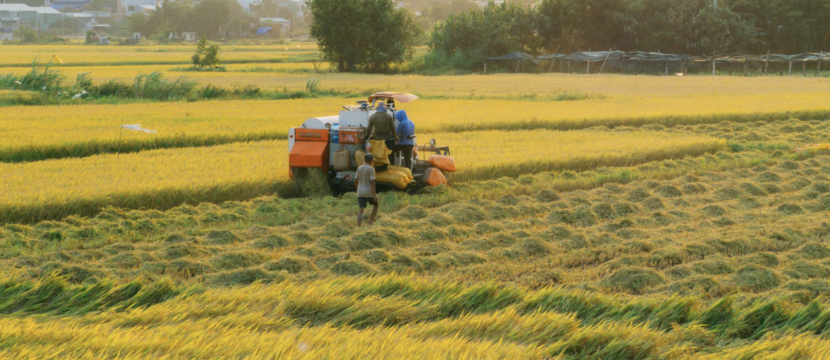
Rural communities across Europe and China are developing innovative, community-led approaches to build more resilient and sustainable local economies. The NEXRUR project connects experiences, knowledge and communities across both regions to explore how rural innovation can create new opportunities for people, businesses and territories.
Rural areas in Europe and China are facing many shared challenges: climate change, biodiversity loss, pressure on water resources, ageing populations, depopulation, and the need for farmers and rural communities to receive greater value for their work. Although each territory has its own history, culture and economic reality, many of the key questions are similar. How can rural communities create new opportunities? How can producers improve their position in value chains? How can rural businesses become economically viable while also delivering social and environmental benefits?
The NEXRUR project was created to explore these questions and identify innovative solutions through international cooperation between the European Union and China. By bringing together complementary experiences in community-led development, cooperative models, technological innovation and climate resilience strategies, NEXRUR creates a unique space for shared learning and collaboration across continents.
Europe and China: different contexts, shared challenges
NEXRUR investigates new ways to strengthen rural resilience through sustainable, community-led business models. The project aims to support farmers, rural businesses and local communities in developing, selecting and scaling up business models that consider not only economic performance, but also social and environmental impact. The project focuses on community-led business models: initiatives in which local communities play an active role in shaping, developing or managing these business models. These may include cooperatives, producer-consumer networks, local food initiatives, shared management models or projects designed to respond to specific local needs.
One of the defining features of NEXRUR is its international approach. The project brings together 20 partners from the EU and 11 from China, including universities, research centres, associations, companies, rural organisations and innovation support actors. The collaboration is structured around parallel activities and exchanges between European and Chinese partners. This allows the project to compare rural innovation approaches in different contexts while identifying common lessons, transferable practices and opportunities for shared learning.
“With NEXRUR, we share knowledge and best practices between Europe and China to support farmers and communities in rural areas co-design and co-create sustainable business models through a network of established community-led cases. By combining knowledge, practice, and international cooperation, we aim to strengthen rural resilience, generating more jobs, better services, improved access to healthy food, and greater value for agriculture.” – Philipp Grundmann, NEXRUR Project Coordinator from ATB.
A network of real-life rural cases
NEXRUR’s real-world community cases cover a wide range of territories, value chains and organisational models in both continents. They include cooperatives, urban agriculture initiatives, agroforestry models, aquaculture, local food production, circular economy solutions, agricultural technologies and initiatives involving farmers, consumers, local authorities, businesses and citizens. The strength of this network lies in its diversity. By comparing experiences across countries, climates, social structures and production systems, NEXRUR aims to identify what helps rural business models succeed, what barriers they face, and how promising approaches can be adapted or replicated.
In NEXRUR, innovation is not only about technology. It is also about new ways of cooperating, making decisions, sharing resources, connecting producers with consumers, and recognising the social and environmental value created by rural activities.
A key moment in strengthening this international collaboration took place from 15–17 April 2026 in Burgos, Spain, where NEXRUR use case leaders, consortium partners and representatives of the Chinese consortium gathered for a three-day workshop of the NEXRUR Community-Led Business Models (CLBM) Innovation Network. As part of the programme, the Chinese consortium presented the Tongxiang case, showcasing China’s experience in community-led rural development and green transformation. The sharing of case-based knowledge and discussions among participants promoted mutual learning, enhanced communication between European and Chinese partners, and further consolidated the foundation for future collaboration.
Organised by Universidad de Burgos and Wageningen University & Research within the framework of the NEXRUR project, the workshop provided an important opportunity for exchange and collaboration across the network. Participants shared experiences from their respective community cases, explored common challenges and opportunities for rural innovation, and gained deeper insight into the histories, ambitions and development pathways of the different initiatives involved in the project. The meeting also strengthened cooperation between European and Chinese partners, reinforcing NEXRUR’s role as a platform for international learning, co-creation and community-led rural innovation.
Impact beyond the project: building the rural future
The cooperation between Europe and China in NEXRUR aims to generate practical results for farmers, rural communities, policymakers, researchers, businesses and rural development organisations. Expected outputs include policy recommendations, replication and scaling strategies, monitoring tools, scientific publications, training activities and spaces for exchange between European and Chinese actors. Beyond these outputs, NEXRUR also highlights an important message: rural communities are not only places in need of support. They are places with the capacity to innovate, collaborate and lead change.
NEXRUR opens a pathway for rural territories to become more resilient, create new opportunities and contribute to a more sustainable future. Because the future of rural areas will not be built from one place alone. It will be built by connecting territories, sharing knowledge and placing communities at the heart of change.
原文链接:
https://nexrur.eu/how-nexrur-connects-europe-and-china-to-strengthen-rural-communities/